Labyrinth Game: Finding Your Way Through Puzzle Mazes
Whether you're navigating a complex digital interface or helping a child develop critical thinking skills, the Labyrinth Game, Finding Way Puzzle offers a surprisingly versatile and valuable tool. At first glance, it may seem like a simple maze-solving activity, but its applications extend far beyond entertainment. From cognitive development to branding opportunities, this type of puzzle provides a foundation for problem-solving, creativity, and engagement across a variety of contexts.
What Makes the Labyrinth Game Unique?
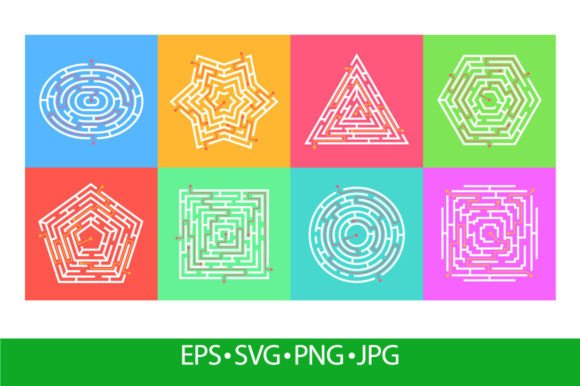
The Labyrinth Game, Finding Way Puzzle is more than just a game of trial and error. It's a structured challenge that encourages logical thinking, spatial awareness, and decision-making. These mazes often come in various forms—round mazes, geometric patterns, or abstract shapes—each offering a unique visual and mental experience. Designed for children and adaptable for adults, these puzzles are typically delivered in vector formats like EPS, SVG, PNG, and JPEG, making them ideal for both print and digital use.
One of the most notable qualities of this puzzle type is its simplicity. Unlike complex games that require steep learning curves, the Labyrinth Game offers an immediate, intuitive experience. This accessibility makes it a go-to solution for educators, designers, and developers who want to engage users without overwhelming them.
Key Strengths of Labyrinth-Based Puzzles
- Visual Appeal: The use of clean lines, geometric balance, and symmetrical designs makes these puzzles visually engaging.
- Scalability: Vector formats ensure high-quality reproduction at any size, ideal for both mobile apps and printed educational materials.
- Customizability: Designers can easily modify colors, shapes, and complexity levels to suit specific audiences or branding needs.
- Cognitive Engagement: Encourages focus, patience, and logical reasoning in a low-pressure environment.
Practical Applications Across Industries
The Labyrinth Game, Finding Way Puzzle isn't just for kids. Its adaptability allows it to serve a wide range of professional and creative purposes:
- Educational Tools: Teachers can use these puzzles to help students develop spatial reasoning and fine motor skills. For example, a printable round maze can be integrated into a math or logic worksheet for early learners.
- Branding and Marketing: Businesses can incorporate branded versions of these puzzles into promotional materials or digital campaigns. A custom-designed maze with a company logo embedded in the path can serve as an engaging and memorable touchpoint.
- App Development: Mobile game developers often leverage SVG or PNG versions of mazes to build interactive puzzle apps. These assets load quickly and scale well across devices.
- Therapeutic Use: Occupational therapists use maze puzzles to help patients improve hand-eye coordination and cognitive flexibility, especially in rehabilitation settings.
- Design and Illustration: Graphic designers can integrate maze elements into posters, book covers, or packaging to add visual interest and interactivity.
Why It Works for User Engagement
In a digital landscape where attention spans are short, the Labyrinth Game, Finding Way Puzzle offers a refreshing alternative to passive content consumption. It invites interaction, which increases time-on-page metrics and improves user satisfaction. Whether embedded in a website or used as part of a downloadable activity pack, these puzzles can boost engagement without requiring high technical investment.
For example, a blog post about problem-solving strategies might include a downloadable maze that readers must solve to access a bonus resource. This approach not only reinforces the content’s message but also creates a sense of accomplishment for the user.
Choosing the Right Format and Design
When selecting or implementing a Labyrinth Game, Finding Way Puzzle, format and design are key considerations. Vector formats like EPS and SVG are best for scalability and customization, especially in design or web applications. For quick use in presentations or printed materials, JPEG or PNG files may be more convenient.
Designers should also think about complexity levels. A simple maze might be ideal for younger children or branding applications, while more intricate versions can challenge older audiences or serve as part of a gamified learning module. Always test the clarity and usability of the maze before final deployment—especially if it's intended for a specific audience like students or app users.
Real-World Examples and Use Cases
- A children’s book publisher uses a Labyrinth Game, Finding Way Puzzle as a bonus activity at the end of each chapter to reinforce themes and keep readers engaged.
- An online learning platform integrates SVG mazes into a logic and reasoning course, using them as interactive exercises that students can complete in-browser.
- A toy brand creates a branded maze puzzle as part of a holiday promotional campaign, offering a printable version on their website and a physical version in product packaging.
- A UX designer incorporates a maze-style navigation challenge into a prototype to test user decision-making and pathfinding behavior in a low-stakes environment.
Maximizing the Value of Maze-Based Puzzles
To get the most out of the Labyrinth Game, Finding Way Puzzle, consider how it aligns with your broader goals. If you're an educator, look for puzzles that support curriculum objectives. If you're a marketer, choose designs that reflect your brand’s visual identity. And if you're a developer, prioritize formats that integrate smoothly with your platform.
Also, don't overlook the storytelling potential of mazes. A well-designed puzzle can symbolize a journey, a challenge, or a process—making it a powerful metaphor in branding, teaching, or digital storytelling. Whether used literally or figuratively, the maze format offers a rich narrative canvas.
Final Thoughts and Recommendations
The Labyrinth Game, Finding Way Puzzle is a deceptively simple yet deeply effective tool with broad applications. Whether you're designing an educational worksheet, building a mobile game, or creating a branded marketing asset, this type of puzzle offers a blend of functionality, engagement, and aesthetic appeal. When choosing or creating a maze-based puzzle, always prioritize clarity, usability, and relevance to your audience.
Start with a clear objective, select the right format for your needs, and don’t be afraid to experiment with design variations. With the right approach, the Labyrinth Game can become more than just a puzzle—it can be a valuable component of your creative or professional toolkit.