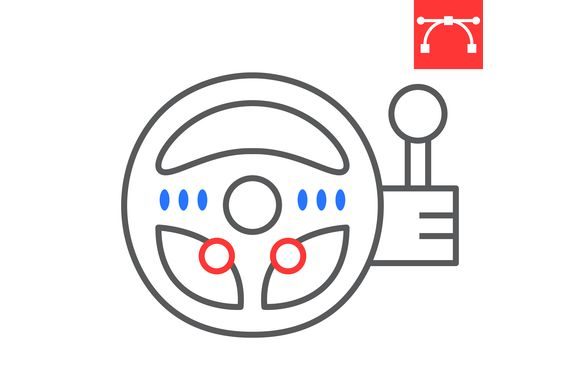
Game Steering Wheel Color Line Icon: A Practical Design Resource for Gamers and Creators
Understanding the Game Steering Wheel Color Line Icon
The Game Steering Wheel Color Line Icon is a versatile vector graphic tailored for digital creators working in gaming, simulation, and interactive media. Designed as an editable stroke linear icon in EPS 10 format, it offers both visual clarity and technical flexibility. This icon represents a steering wheel commonly associated with racing games and simulators, making it a relevant and recognizable symbol for UI elements, promotional materials, or branding assets in game-related projects.
What sets this icon apart is its clean, minimalist design combined with full color customization. Unlike static images or overly stylized graphics, this icon maintains a balanced aesthetic that works across different design contexts. Whether used in mobile apps, game menus, or marketing banners, the Game Steering Wheel Color Line Icon provides a modern, scalable solution for developers and designers alike.
Key Features and Technical Advantages
- Editable Stroke: The vector format allows for easy adjustments to line thickness, ensuring consistency with other UI elements.
- Color Customization: As a color line icon, it supports full recoloring to match brand palettes or interface themes.
- EPS 10 Compatibility: Widely supported by professional design tools like Adobe Illustrator, ensuring smooth integration into existing workflows.
- Scalable Quality: Vector-based design preserves clarity at any size, from mobile buttons to large banners.
These technical attributes make the Game Steering Wheel Color Line Icon especially useful for UI/UX designers, game developers, and digital marketers who require adaptable and high-quality visuals without compromising on design integrity.
Practical Use Cases and Real-World Application
In practice, the Game Steering Wheel Color Line Icon serves a variety of roles. For game developers, it can act as a control indicator in racing simulators or as a menu icon for vehicle selection. Designers working on mobile racing games may use it to represent driving mechanics within tutorials or settings panels. Additionally, it can be repurposed for promotional assets such as app store banners, social media graphics, or website buttons.
Consider a racing simulator startup building a new VR experience. They may use the icon to represent driving controls in their interface, ensuring consistency across platforms. Similarly, a content creator producing game-related tutorials might integrate the icon into their branding or thumbnails to signal racing content to their audience.
Design Consistency and Workflow Integration
One of the most important aspects of any icon set is how well it integrates with existing design systems. The Game Steering Wheel Color Line Icon is part of a broader category of linear, editable icons, meaning it can easily be grouped with other similar assets to maintain a cohesive visual language. This is especially valuable for teams working on large-scale applications or games where UI consistency enhances usability.
For freelance designers or small studios, this icon offers a cost-effective way to maintain professional-grade visuals without needing custom illustrations. Since it's vector-based, resizing and adapting it for different screen resolutions or print materials is straightforward, reducing the need for multiple assets.
Strengths in Presentation and Long-Term Value
From a presentation standpoint, the icon’s clean lines and balanced proportions make it visually appealing without being distracting. Its simplicity ensures it remains readable even at small sizes, which is crucial for mobile interfaces where space is limited. The ability to adjust stroke weight and color also means it can adapt to both light and dark themes, increasing its longevity in a project.
In terms of long-term value, the icon’s vector format and editable nature mean it won’t become outdated quickly. Design trends evolve, but assets like the Game Steering Wheel Color Line Icon can be updated alongside them, reducing the need for frequent redesigns or asset replacements.
Who Benefits Most from This Icon?
The primary audience for the Game Steering Wheel Color Line Icon includes:
- Game Developers: Especially those working on racing or simulator games needing intuitive control icons.
- UI/UX Designers: Looking for scalable, editable icons that integrate seamlessly into design systems.
- Content Creators: Who produce game-related content and need recognizable visual markers for branding.
- Marketing Professionals: In the gaming industry requiring high-quality promotional assets.
Freelancers and small businesses will find it particularly useful due to its affordability and flexibility. It’s also a solid choice for educators or bloggers who need visual aids for tutorials or game reviews, where clarity and professionalism matter.
Limitations and Considerations
While the Game Steering Wheel Color Line Icon is a strong asset, it’s not universally suited for every project. Its minimalist style may not align with brands that prefer a more detailed or retro aesthetic. Additionally, while the icon is scalable, its linear nature means it may not stand out as effectively in cluttered interfaces without sufficient contrast or spacing.
Users should also ensure they have the necessary software to edit EPS files. Although widely supported, some design tools may require conversion to SVG or PNG for certain workflows, adding a small layer of complexity for less experienced designers.
Final Thoughts: Is the Game Steering Wheel Color Line Icon Worth It?
For professionals and creators working in gaming, simulation, or related digital fields, the Game Steering Wheel Color Line Icon is a practical and effective design element. Its combination of visual clarity, technical flexibility, and adaptability makes it a worthwhile investment for UI design, branding, and promotional materials.
If your project involves racing themes, simulators, or vehicle-based mechanics, this icon delivers both functional and aesthetic value. It integrates smoothly into existing design systems and scales well across platforms, making it a reliable choice for both short-term projects and long-term development efforts.