Strategic Use of Cartoon Seamless Ground Game Texture for Enhanced Game Design and Visual Storytelling
Creating immersive digital experiences requires more than just strong narratives or engaging gameplay mechanics. The visual foundation of a game world—especially the ground textures—plays a crucial role in shaping player perception, emotional engagement, and overall usability. Cartoon Seamless Ground Game Texture offers a versatile and scalable solution for developers and designers aiming to build cohesive, visually appealing environments without compromising performance or artistic integrity.
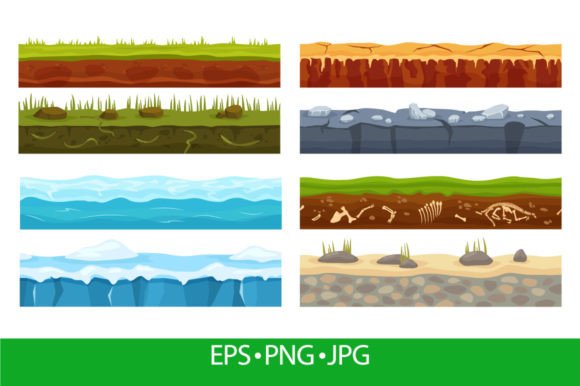
At its core, Cartoon Seamless Ground Game Texture refers to a set of repeatable, stylized surface graphics designed to depict various types of terrain such as grass, soil, desert, ice, and ocean. These textures are commonly delivered in vector (EPS), PNG, and JPEG formats, making them adaptable for both 2D and 3D game development pipelines. When used strategically, these assets can significantly reduce development time, maintain visual consistency, and support long-term scalability of a game’s environment design.
Why Cartoon Seamless Ground Textures Matter in Game Development
One of the most overlooked aspects of game design is environmental continuity. A disjointed or inconsistent terrain layout can break immersion and distract players from the intended experience. Seamless textures solve this by allowing developers to tile surfaces without visible repetition or seams. This is especially valuable in open-world or side-scrolling games where large, uninterrupted landscapes are necessary.
For independent developers and small studios, Cartoon Seamless Ground Game Texture provides a cost-effective way to maintain high-quality visuals without the need for custom asset creation. These pre-designed textures are often crafted with scalability in mind, enabling teams to focus more on gameplay mechanics and narrative development rather than spending hours refining terrain details.
How to Align Texture Use with Game Design Goals
Before integrating any visual asset into a project, it’s essential to consider how it aligns with your broader design objectives. Cartoon seamless ground textures should not be chosen based solely on aesthetic appeal. Instead, they should support the game’s tone, genre, and target audience. For example:
- A whimsical puzzle game aimed at children might benefit from bright, exaggerated grass and soil textures that reinforce the playful atmosphere.
- A survival game set in a harsh desert environment would require more muted, gritty textures to evoke realism and tension.
- For educational or simulation games, consistent and recognizable terrain types (like ice or ocean) help players better understand spatial relationships and environmental challenges.
By aligning texture choices with thematic and functional goals, developers can ensure that every visual element contributes meaningfully to the gameplay experience.
Planning for Long-Term Scalability and Reusability
One of the strategic advantages of using Cartoon Seamless Ground Game Texture is its potential for reuse across multiple levels or even different projects. To maximize this benefit, consider the following planning tips:
- Build a modular texture library: Organize your textures by terrain type and style, making it easier to repurpose them in future builds or expansions.
- Test for adaptability: Ensure that textures can be easily recolored or layered with additional effects to suit different lighting conditions or biomes.
- Document usage patterns: Keep track of which textures work best in specific contexts to streamline decision-making in later stages of development.
By treating your texture assets as part of a strategic visual toolkit rather than one-off resources, you can reduce overhead and maintain consistency across your game’s entire lifecycle.
When to Use Seamless Textures and When to Customize
While Cartoon seamless ground textures offer numerous benefits, they are not always the best choice for every scenario. Consider using them in the following situations:
- You need to rapidly prototype environments to test gameplay mechanics.
- Your game features large, open spaces where tiling is necessary for performance optimization.
- You're working with limited resources and need to prioritize development speed over custom asset creation.
However, if your game requires highly unique or narrative-driven environments—such as a post-apocalyptic cityscape or a procedurally generated alien world—custom textures or hybrid approaches may be more appropriate. In these cases, off-the-shelf Cartoon Seamless Ground Game Texture can still serve as a base layer, which can then be enhanced with bespoke details or overlays.
Strategic Considerations Before Implementation
Integrating any visual asset into a game requires thoughtful planning. Here are key strategic questions to ask before relying on Cartoon seamless ground textures:
- Does this texture support the emotional tone of the scene? A mismatch between terrain and mood can unintentionally dilute the player’s experience.
- Will this texture scale well across different resolutions and platforms? Vector-based textures (like EPS) offer flexibility for scaling, while raster formats (PNG, JPEG) must be used carefully to avoid pixelation.
- Is there enough variety in the texture pack to avoid visual monotony? Look for sets that include variations of the same terrain type to create dynamic environments.
- Are the textures optimized for performance? Large, high-resolution textures can impact load times and frame rates, especially on mobile or low-end devices.
Answering these questions early in the development process can help prevent costly revisions later and ensure that your visual design supports, rather than hinders, your gameplay goals.
Common Pitfalls and How to Avoid Them
One of the most common mistakes in using Cartoon Seamless Ground Game Texture is applying them without considering the broader design context. Simply dropping a grass texture into a scene without regard for lighting, perspective, or biome logic can lead to an artificial, repetitive look that detracts from immersion.
To avoid this, consider layering textures with additional effects such as:
- Dynamic lighting to simulate time of day or weather conditions.
- Parallax scrolling or depth layers to create a sense of movement and dimensionality.
- Randomized placement of rocks, debris, or foliage to break up repetitive patterns.
These enhancements help integrate the texture into the environment more naturally, creating a richer and more engaging player experience.
Supporting Branding and Player Experience Through Visual Consistency
Visual consistency is a key component of brand identity in games. Whether you're developing a single title or a series, using a cohesive set of Cartoon seamless ground textures can help reinforce your game’s visual language. This is especially important for franchises, educational games, or branded experiences where players come to expect a certain aesthetic.
For example, a game studio known for vibrant, stylized worlds can maintain that identity across multiple titles by reusing and refining a core set of Cartoon Seamless Ground Game Texture assets. This not only strengthens brand recognition but also streamlines development by reducing the need for constant asset creation from scratch.
Conclusion: Intentional Use for Strategic Outcomes
Incorporating Cartoon Seamless Ground Game Texture into your development workflow is more than just a design shortcut—it's a strategic decision that can influence the quality, efficiency, and longevity of your game. When used thoughtfully, these textures support faster prototyping, consistent visual storytelling, and scalable asset management.
However, like any tool, their value is determined by how intentionally they are applied. By aligning texture choices with gameplay goals, testing for adaptability, and planning for reuse, developers can ensure that every pixel contributes to a more polished, immersive, and strategically sound game experience.
Whether you're building a small indie title or planning a large-scale game world, Cartoon Seamless Ground Game Texture can be a powerful ally—if you approach it with clarity, purpose, and a long-term vision.