Letter Formation Dice Game Letters A-Z: A Practical Tool for Engaging Alphabet Practice
Integrating Play and Learning in Early Education Workflows
The Letter Formation Dice Game Letters A-Z is more than just a classroom activity—it’s a streamlined, low-prep solution for educators and parents aiming to reinforce letter recognition and handwriting skills in young learners. Designed to blend seamlessly into daily routines, this tool turns the often repetitive task of letter formation into a game, making it easier to maintain student engagement without sacrificing educational value.
How the Dice Game Fits Into a Broader Learning Process
In early childhood education, consistency and repetition are key. The Letter Formation Dice Game serves as a flexible reinforcement mechanism that can be slotted into multiple phases of a learning workflow. Whether used as a warm-up activity before structured lessons, a mid-day refresher, or a quiet-time task following group instruction, it adapts well to various classroom rhythms.
From a planning perspective, the game aligns with both short-term lesson goals and long-term developmental objectives. It supports the gradual acquisition of fine motor skills, which are essential for writing fluency, and reinforces letter identification, a foundational component of literacy development.
Before Implementation: Preparation and Setup
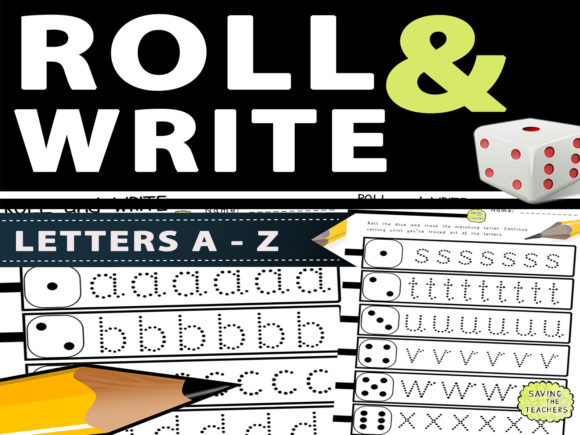
Preparation is minimal, making this tool especially valuable for time-constrained educators. The core materials include a printable activity sheet featuring all 26 letters and a standard six-sided die. Each letter is repeated multiple times on the sheet, allowing for repeated rolls and practice.
- Print and laminate sheets for reuse with dry-erase markers.
- Organize materials such as dice and writing tools in labeled bins for easy access.
- Store in a designated literacy station or morning work basket for consistent use.
This streamlined setup supports classroom efficiency, especially when integrated into a rotation system or independent work time.
During Use: Game Mechanics and Engagement
The game operates on a simple mechanic: students roll the die, find the corresponding letter on the sheet, and trace it. This process repeats until all instances of the rolled letter are traced. The element of chance keeps the activity dynamic, while the physical act of tracing reinforces muscle memory for letter formation.
Because the game is self-directed, it can be used during small group instruction or as a station activity while the teacher works with other students. This makes it a valuable tool for differentiated instruction, allowing children to progress at their own pace while staying engaged with the material.
After the Game: Reinforcement and Extension
Once the sheet is complete, educators can extend learning by incorporating follow-up activities that build on the practiced letters. For example:
- Use the traced letters as a reference for writing practice in journals.
- Pair the game with phonics exercises by asking students to say the sound of each letter they roll.
- Create a word wall using the letters practiced that day.
This approach ensures that the Letter Formation Dice Game isn’t an isolated activity but a springboard for deeper literacy engagement.
Integration with Other Tools and Resources
One of the strengths of the Letter Formation Dice Game is its compatibility with a wide range of existing classroom tools and methods. It works well alongside:
- Phonics charts – to connect letter names with sounds.
- Writing centers – as a warm-up before independent writing.
- Assessment tools – to observe letter formation progress over time.
- Digital literacy apps – as a tactile complement to screen-based learning.
Its simplicity allows for easy pairing with both analog and digital resources, making it a versatile component in blended learning environments.
Workflow Example: Using the Dice Game in a Morning Routine
Consider a typical early childhood classroom where students arrive at different times and need structured, independent tasks to begin their day. Here’s how the Letter Formation Dice Game can fit into that routine:
- Students enter and grab their assigned dice game sheet and a die.
- They work independently tracing letters based on their rolls.
- As they finish, they place the sheet in a designated bin for review.
- The teacher can quickly scan completed sheets to assess progress and identify areas needing support.
This workflow not only supports smooth transitions into the school day but also builds habits of self-direction and accountability.
Usability and Long-Term Implementation
The Letter Formation Dice Game is designed with usability in mind. Its structure is easy to explain, and once students understand the rules, they can play with minimal supervision. This makes it ideal for use in a variety of settings:
- Classroom centers
- After-school programs
- Homeschool routines
- Parent engagement activities
For long-term use, consider rotating letter sets or combining multiple sheets to create a cumulative review. Laminating sheets or using page protectors ensures durability and reduces paper waste.
Quality Control and Consistency
Maintaining consistency in skill development requires regular practice. To ensure quality control over time:
- Use the same format consistently to build familiarity.
- Track student progress by collecting or reviewing completed sheets weekly.
- Provide feedback through brief, individual check-ins.
These small but deliberate steps help ensure that the Letter Formation Dice Game remains a meaningful part of the learning process rather than a one-off activity.
Customizing the Game for Different Needs
While the standard Letter Formation Dice Game Letters A-Z covers all 26 letters, educators can easily adapt the format to suit different learning goals:
- Focus on uppercase or lowercase letters by printing sheets with only one case.
- Target specific letters that students are struggling with.
- Introduce a second die to create letter combinations or syllables for advanced learners.
These variations allow for differentiation and ensure that the game remains relevant as students progress in their literacy journey.
Conclusion: A Versatile Addition to Early Literacy Workflows
The Letter Formation Dice Game Letters A-Z is a practical, adaptable tool that bridges play and structured learning. By embedding it into daily routines, educators can support consistent letter practice without overwhelming students or consuming excessive prep time. Its flexibility makes it suitable for a wide range of classroom environments and learning styles, ensuring that it can be a valuable part of any early literacy strategy.