Chess and Checker Game Piece Patent Art: A Unique Design Resource
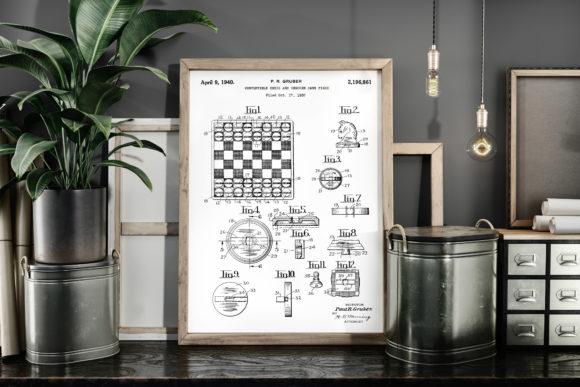
The Chess and Checker Game Piece Patent Art is more than a historical document—it’s a compelling visual asset with surprising relevance in modern graphic design. Originally filed by P. R. Gruber and issued on April 9, 1940, this patent showcases a convertible game piece design that bridges functionality with aesthetic appeal. Today, designers are rediscovering its value as a source of inspiration, branding elements, and creative assets for a variety of visual projects.
Design Value in Historical Detail
This restored patent art, now available in high-resolution JPG format (300 DPI) on both black and white backgrounds, offers a clean, scalable design element that integrates seamlessly into contemporary design workflows. The clarity and historical charm of the illustrations make them ideal for adding a touch of vintage authenticity to modern compositions.
From a visual design standpoint, these images provide a unique opportunity to blend retro aesthetics with current design trends. Whether used in editorial design, packaging, or UI/UX mockups, the Chess and Checker Game Piece Patent Art brings a sense of craftsmanship and narrative depth that resonates with design-savvy audiences.
Applications in Branding and Marketing
Designers working on brand identity or logo design can incorporate these patent illustrations to create a distinctive visual language. The mechanical precision and clean lines of the patent drawings lend themselves well to minimalist branding systems, especially for lifestyle, education, or strategy-based product lines.
- Use the patent art in logo concepts for board game cafes or puzzle-themed brands
- Incorporate into packaging design for vintage-inspired merchandise
- Feature in social media graphics to communicate innovation and heritage
The versatility of this artwork allows for seamless integration into both print and digital marketing materials, supporting cohesive brand storytelling across multiple platforms.
Enhancing Web and UI Design with Authentic Visuals
In web design and user interface projects, the Chess and Checker Game Piece Patent Art can be used as background textures, iconography references, or interactive elements. Its vector-ready clarity ensures it scales beautifully from A4 to A3 without loss of quality, making it ideal for responsive layouts and high-resolution displays.
For UX designers, these visuals offer a familiar yet unique aesthetic that can guide user interaction and emotional engagement. When paired with modern typography and a curated color palette, the patent art can elevate the visual hierarchy of a design without overwhelming the user experience.
Creative Uses Across Design Disciplines
From editorial layouts to advertising campaigns, this patent art offers a flexible foundation for creative exploration:
- Editorial design: Use as decorative dividers or full-page backgrounds in magazine spreads
- Packaging: Apply to product boxes, labels, or inserts for a vintage-engineered feel
- Digital products: Integrate into app interfaces or digital templates for educational tools
- Miscellaneous merchandise: Print on posters, apparel, or stationery for niche markets
Its adaptability makes it a valuable asset for creative professionals looking to add depth, storytelling, and tactile quality to their work.
Choosing the Right Elements for Your Project
When selecting design elements like the Chess and Checker Game Piece Patent Art, consider how they align with your project’s visual goals and audience expectations. Ensure consistency with your brand identity, test readability in different contexts, and maintain scalability for both screen and print use.
For best results, pair the patent illustrations with modern design components—clean fonts, balanced compositions, and strategic color use—to create a harmonious blend of old and new. This approach not only enhances aesthetic appeal but also strengthens communication through visual clarity and emotional resonance.
Ultimately, thoughtful selection and application of design assets like this patent art can transform a good design into a compelling, memorable one—proving that history, when reimagined creatively, still has a powerful place in contemporary visual culture.